Navigating The Political Landscape of Video Games: Part 2 – A Culture-Driven Strategy for Building Gaming Audiences
10 January 2025By Benky
By Paul Bakare
More than 33% of the humans on planet Earth play video games and the gaming industry is a vast and interconnected digital world, with games representing unique countries and developers acting as their governments. Just as the real-world geopolitical landscape is shaped by cultures, economies, and citizen participation, the political landscape of gaming thrives on the strength of its communities. To navigate this landscape effectively, it is essential to understand gamer demographics and craft strategies to build vibrant, culture-driven gaming communities.
This article expands on this analogy, delving into gamer demography, their demands, and requirements, and offering actionable strategies to market games and develop their communities.
This article series is a sequel to Navigating the Political Landscape of Games: An Analogy to World Structure by Paul Bakare and will be expanded on as time goes on
Understanding the Political Landscape: Games as Countries, Developers as Governments, Game Genres as Continents
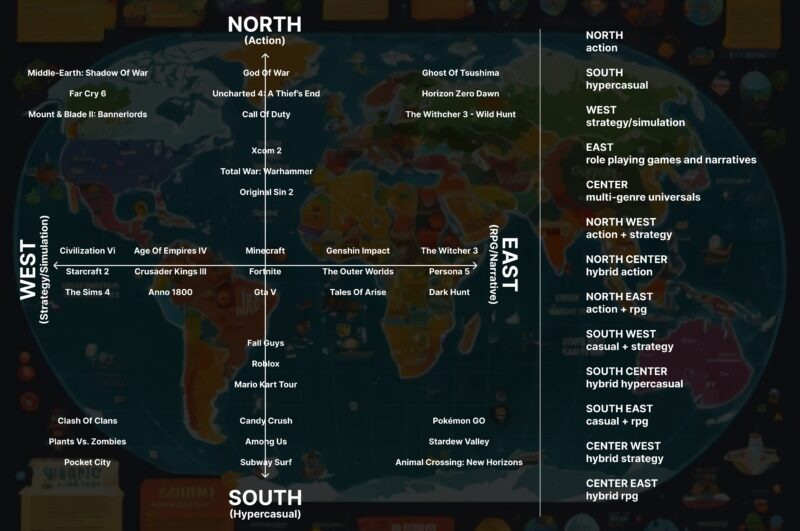
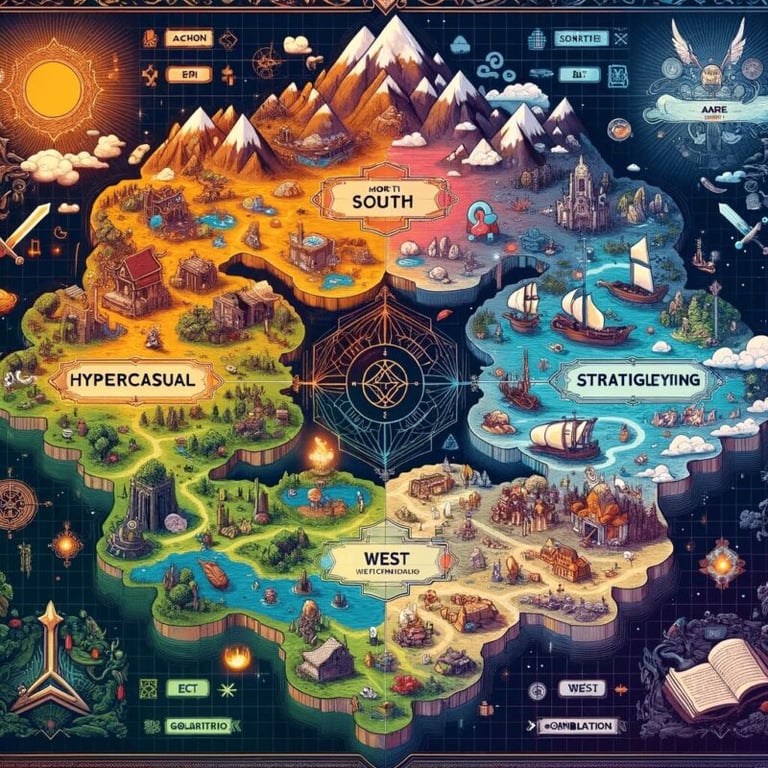
Every game can be seen as a nation with its culture, economy, and population. Developers, akin to governments, design the systems, rules, and environments that govern these virtual worlds. For this analogy, we use cardinal points to divide the map of video games and streamline into 4 key universal yet distinctive genres: – North for Action Games, South for Hypercasual Games, West for Strategy and Simulation Games, East for RPG and Narrative Games, and Center for the Combination of all 4
- North (Action Games): Nations of dynamic exploration, conquest, and adrenaline-fueled quests. E.g God of War, Uncharted 4, Call of Duty
- South (Hypercasual Games): Minimalist states, welcoming casual visitors with simplicity and instant gratification. E.g Candy Crush, Among Us, Subway Surf
- West (Strategy/Simulation Games): Structured societies where planning, strategy, and governance take precedence. E.g Civilization VI, Starcraft II, The Sims 4
- East (RPG/Storytelling Games): Rich, immersive cultures driven by lore, emotional connection, and character progression. E.g The Witcher 3, Persona 5, Dark Hunt
- Center (Combination of All Four): Cosmopolitan hubs blending elements from all regions, offering universal appeal. E.g Minecraft, Fortnite, GTA V
Gamer Demographics: The Citizens of the Gaming World
Understanding the people who populate these virtual nations—gamer demographics—is crucial. Each region attracts a specific type of player based on their personality, play style, and lifestyle preferences.
1. North: Action Games
- Projected Population: 35% of global gamers
- Average In-Game Spend: $70 per month
- Demographic Profile:
- Age: 18–35
- Gender: Predominantly male (65%) but with growing female participation.
- Traits: Adventurous, competitive, thrill-seeking, and goal-oriented.
- Preferences: High-quality graphics, open-world exploration, engaging combat systems.
- Demands and Requirements:
- Regular updates, new content, and expansions.
- Engaging storylines and complex missions.
- Multiplayer options for cooperative and competitive gameplay.
2. South: Hypercasual Games
- Projected Population: 40% of global gamers
- Average In-Game Spend: $10 per month
- Demographic Profile:
- Age: 10–50
- Gender: Balanced (50% male, 50% female).
- Traits: Relaxed, spontaneous, prefers quick play sessions.
- Preferences: Easy-to-learn mechanics, minimal time commitment, mobile-first accessibility.
- Demands and Requirements:
- Intuitive interfaces and instant gameplay.
- Social integration for sharing achievements.
- Frequent challenges and small, rewarding updates.
3. West: Strategy/Simulation Games
- Projected Population: 15% of global gamers
- Average In-Game Spend: $50 per month
- Demographic Profile:
- Age: 25–50
- Gender: Predominantly male (70%).
- Traits: Analytical, methodical, patient, and detail-oriented.
- Preferences: Realism, deep mechanics, and expansive content.
- Demands and Requirements:
- Tools for modding and customization.
- Comprehensive tutorials for learning complex mechanics.
- Active developer engagement to address bugs and improve gameplay.
4. East: RPG/Storytelling Games
- Projected Population: 20% of global gamers
- Average In-Game Spend: $60 per month
- Demographic Profile:
- Age: 20–40
- Gender: Predominantly male (60%) but with strong female participation.
- Traits: Imaginative, empathetic, emotionally driven.
- Preferences: Deep narratives, well-developed characters, and expansive worlds.
- Demands and Requirements:
- Rich storytelling and cinematic experiences.
- Side quests and player-driven choices.
- Community-driven fan content and lore discussions.
5. Center: Blended Genres
- Projected Population: 25% of global gamers
- Average In-Game Spend: $40 per month
- Demographic Profile:
- Age: 15–35
- Gender: Diverse (55% male, 45% female).
- Traits: Versatile, open to experimentation, community-driven.
- Preferences: Genre-blending games, diverse mechanics, social interaction.
- Demands and Requirements:
- Versatile gameplay modes.
- Accessible features for players across skill levels.
- Regular updates that introduce new mechanics or themes.
Building Gaming Communities: A Culture-Driven Approach
Communities form the backbone of gaming ecosystems, much like societies do for nations. Tailoring community-building efforts to each region is essential for creating lasting engagement.
1. North: Action Games
- Key Strategies:
- Host multiplayer tournaments or cooperative events.
- Build lore-focused forums for fans to discuss theories.
- Collaborate with streamers and content creators to showcase high-energy gameplay.
- Community Development:
- Use leaderboards and rankings to encourage competition.
- Create behind-the-scenes content with developers to deepen player engagement.
2. South: Hypercasual Games
- Key Strategies:
- Use social media platforms like TikTok and Instagram for quick, visually appealing promotions.
- Introduce referral programs to attract new players.
- Organize casual player challenges with small prizes.
- Community Development:
- Provide tools for sharing gameplay highlights.
- Maintain an active social media presence to interact with players.
3. West: Strategy/Simulation Games
- Key Strategies:
- Develop forums for sharing strategies and mods.
- Host long-term in-game events that challenge players’ strategic skills.
- Highlight real-world applications of gameplay mechanics in marketing.
- Community Development:
- Offer direct communication channels between players and developers.
- Recognize top players and contributors through community awards.
4. East: RPG/Storytelling Games
- Key Strategies:
- Highlight player-created content such as fan art and stories.
- Release episodic content or expansions to maintain narrative engagement.
- Partner with cosplayers and voice actors for live events.
- Community Development:
- Create platforms for collaborative storytelling among players.
- Use polls to let players influence the direction of future content.
5. Center: Blended Genres
- Key Strategies:
- Organize cross-genre in-game events.
- Collaborate with popular gaming personalities who appeal to diverse audiences.
- Promote inclusivity through accessible mechanics and global themes.
- Community Development:
- Encourage cross-platform play and interactions.
- Celebrate diversity within the player base with thematic updates.
Conclusion
The political landscape of gaming, with its myriad genres and demographics, offers a unique opportunity to foster vibrant, engaged communities. By understanding the “citizens” of these digital nations—the players—and addressing their distinct demands, developers and marketers can craft culture-driven strategies that resonate deeply.
Ultimately, the gaming industry thrives on its ability to unite people across cultures, genres, and platforms, proving that the true power of gaming lies in its capacity to bring people together in shared virtual worlds.
Paul Bakare is a writer, strategist, and gaming enthusiast passionate about exploring the intersections of culture, technology, and community in the world of video games.